The Rice of 
One grain on the first square, two on the second, four on the third… Can you fill all 64?
 0 grains
0/s0/s | +1/c
One grain on the first square, two on the second, four on the third… Can you fill all 64?
0 grains
0/s0/s | +1/c
The king's treasurer · paid consultation
Only your clicks so far. Hire a little gleaner!
| Investment | Cost | Yield | Pays back in | Affordable in |
|---|
Paid by the second: a share of your production goes to the treasurer for as long as the service runs. Clicks are never taxed, and services pause while the game is closed. Click a service to take it, click it again to stop.
A row of shortcuts above the board: ledger, steward and doorman in one click, straight to the loan counter, the stock exchange and the Gazette — without paying for a visit to the treasurer.
The palace ad blocker: no more pop-up ads while he is on duty. Click to hire him, click again to dismiss him.
Protects the producers you no longer buy from an unlucky click.
Paid by the second, on top of the services above. Click to take it, click again to stop.
Before you start
The treasurer (bottom right) gives advice for a fixed fee. Your game saves itself in this browser; export it to keep a copy.
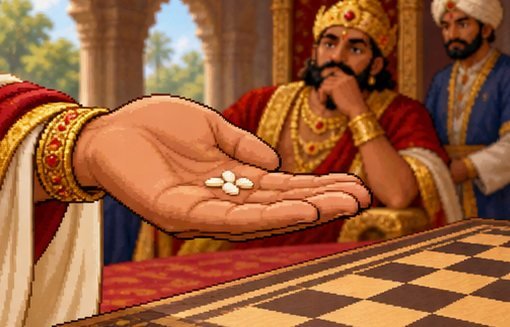
Long ago in India, the sage Sissa invented a game of war on 64 squares, the ancestor of chess, to show his king that a ruler is nothing without his people.
Delighted, the king offered him any reward he wished. Sissa asked only for rice: one grain on the first square, two on the second, four on the third, doubling each time until the last.
The king laughed at such a modest request and ordered it paid. Days later his treasurer came back pale: the whole kingdom did not hold that much rice. The last square alone called for more than all the others combined.
In total: 18,446,744,073,709,551,615 grains, around 460 billion tonnes, nearly a thousand years of the world's rice harvest. In Kerala they say the sage was Krishna in disguise, and that the temple of Ambalappuzha still repays the debt by serving payasam to pilgrims.
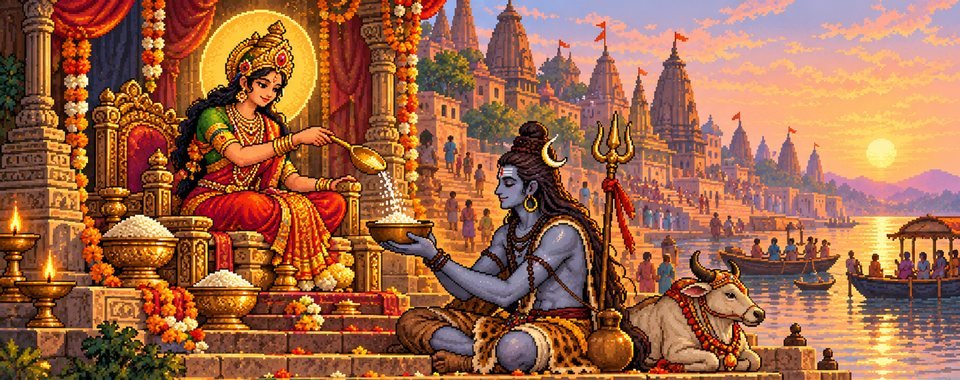
 Vidyā — knowledge
Every pothi you find gives you 2 minutes of your production at once.
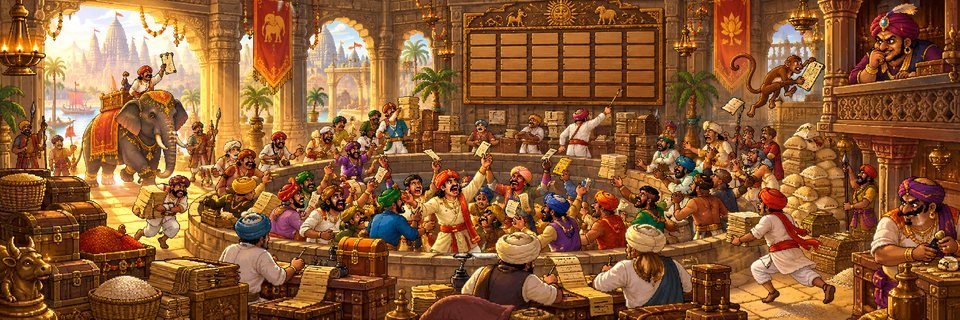
My cousin is a stockbroker
All the rice that’s fit to print
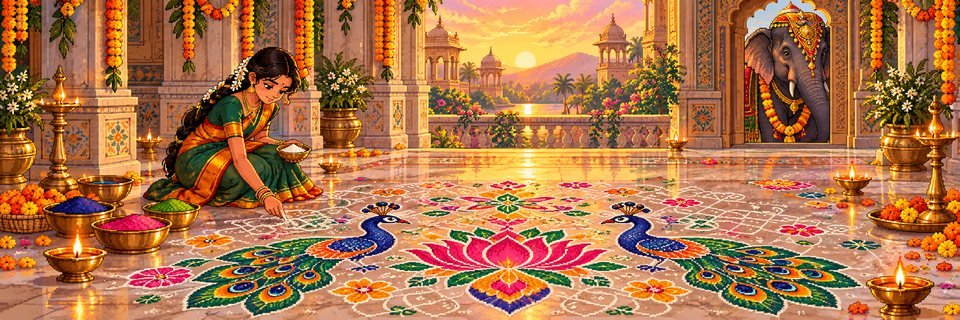
The kolam artist’s workshop
Every morning, a pattern of rice flour is drawn on the threshold. Choose yours: it will cover the whole palace.
Inspired by Patternator, my remake of an earlier pattern-making site.
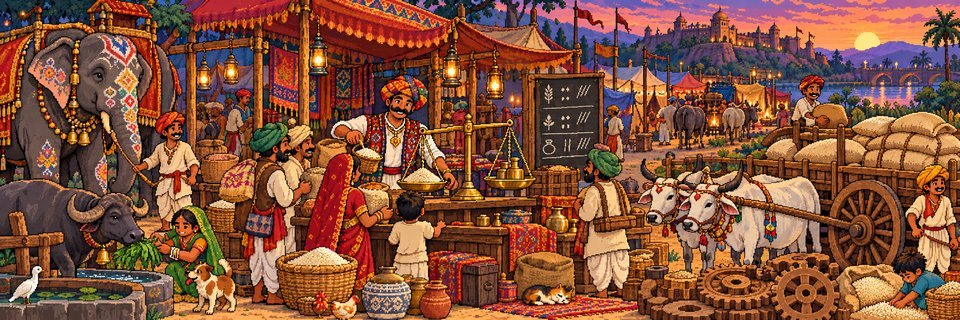
The Banjara merchant buys too
The merchant buys back your latest producers at a share of their price paid: what you spent to get them, merchant discounts included. The shop takes them back at 90%; the merchant pays between 80 and 110%, depending on the moment. Above 90%, he pays more than the shop; above 100%, you make money. If you buy more during an offer, it drops back below 100%. The money goes to your granary but does not fill the chessboard, and what you sell stops producing.
No offers right now: the merchant will post more soon.
Treasurer · Protection
For each producer, choose what a click in the shop does. “Folded row”: the row shrinks, and a first click unfolds it without buying anything. “Confirm”: the row stays full, but every purchase asks for your OK.
The insurance is off: these settings apply as soon as you subscribe.

Share the game
Take grains from your granary: the link gives them to your friend when they start their game.
Export your save first if you might want it back: you can import it later.
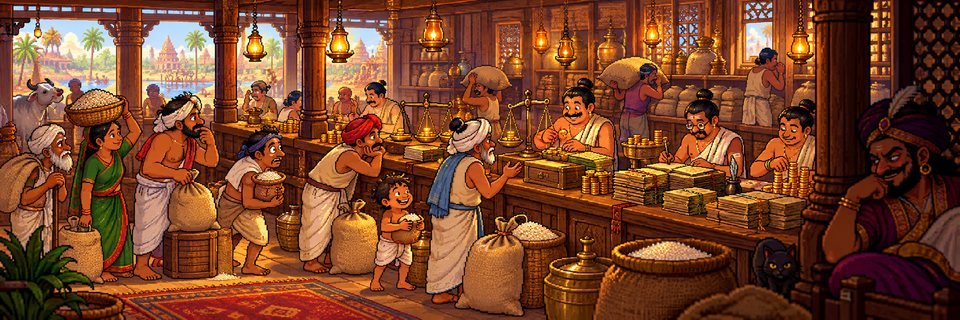
At the treasurer’s counter
Borrow now, repay by the second: a share of your production goes to the lender until the debt is paid off, even while the game is closed. Borrowed grains fill your granary, not the chessboard: only harvests count for the squares. And the king will not recognise a full chessboard while a debt is running: the game is only won once every loan is repaid.
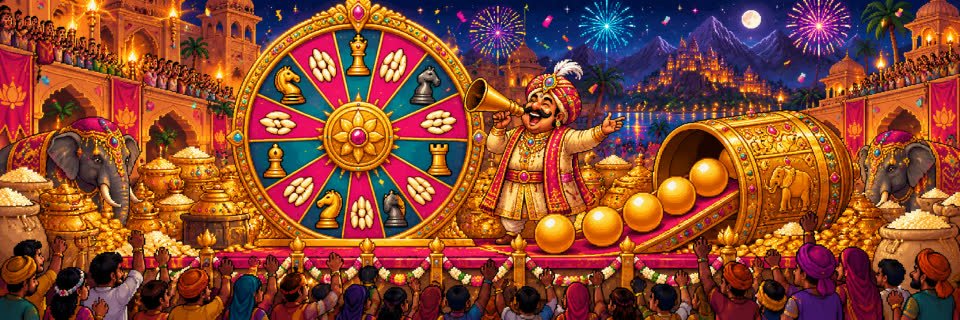
Pick 5 different digits. Every right digit counts, even in the wrong order; in the right place, it pays more.

Your 5 digits must all be different.
Green: right digit, right place · Gold: right digit, wrong place
Live from the royal studio
Choose the right answer.
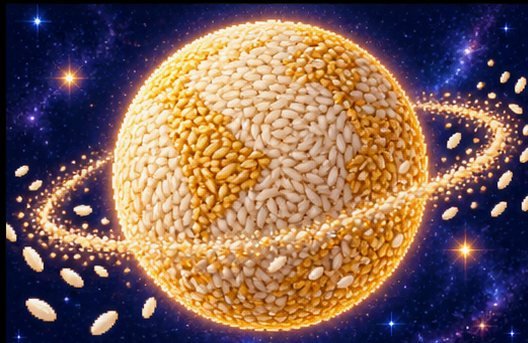
Square 64
You did what the king could not: every square is covered, down to the very last grain.
About 460 billion tonnes of rice. Sissa would have been impressed. The treasurer, less so.